

Rev’d Canon Sandra Miller, Head of Life Events for the Church of England, says churches often underestimate the importance of keeping in touch with families after a christening, baptism, wedding or funeral.
She was speaking at the Diocese of Exeter’s recent Life Events Conference in Tiverton and Newton Abbot.


Sandra has been in her role for eight years and has built-up lots of practical knowledge and tips about how to engage with everyone who comes through the church doors for whatever reason.


“People did not say that they would not go back to church because it was too cold or the chairs were too hard. They said they would not go back because ‘no one smiled at me’.” – Sandra
“Remember these events, although they are a local experience, are part of being the national church as well. The whole purpose of this is that we are going with people on their faith journey. Somehow they are stepping in on that journey and we are moving them forward in some way.”
Sandra emphasised the importance of attracting, building relationships with and caring for people who may only enter your church once.
She said that the most common time someone will enter a single church for one time only is at a life event (like a wedding or funeral), but caring about the welcome and interactions one-time visitors get was vital for the bigger picture of their faith journey.
“Just because they don’t live near you, doesn’t mean they don’t count.”
One tip Sandra gave was about the language people not overly-familiar with church life use. Generally what is liturgically known as a baptism is called a christening. During a christening then a child is baptised as the water is poured over their heads. Being aware and accepting of the colloquial language people use an important part of being welcoming to all.
During a talk about funerals, Sandra gave practical advice on how to become a bereavement friendly church, including remembrance services and prayer guidance.
Talking about the aftercare services secular funeral companies provide now, Canon Sandra said, “When I started this role seven or eight years ago, I could say with confidence it was unique to us [the church] that we would be there afterwards. It is not anymore.
“Funeral directors and celebrants are investing in “after bereavement care” and putting on remembrance services, so unless people know what we are offering that will go too to the secular world.
One of the distinctive things we have is that we are part of the whole national Church of England: the whole Church of God.
“Bereavement care and pastoral care is as much about the fact that the family you have met where you live can go into Exeter Cathedral and light a candle or Gloucester Cathedral and light a candle.
“They can say a prayer when they are on their holiday on the cliffs of North Devon or pause in a churchyard. That is us offering bereavement care. It is not all about you in your parish.”
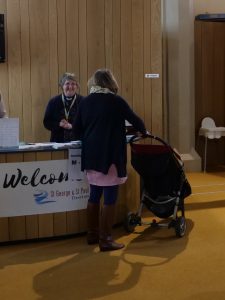

Liz, a curate at St Paul’s Church, Tiverton said, “The one thing I am going to take away from today is really remembering how much the families who come to life events services want to engage with the congregation of the church and encouraging that in the congregation.”
The Licensed Lay Minister in the Alphington Mission Community, Anthony Cummings, said, “The big thing I am going to take away is some of the creative ideas of how we can keep in touch with people after they have been with us for some life events ministry and the importance of going along as a representative member of the congregation to things like christenings and baptisms.”