

CAPTION: The Hiroshima Peace Memorial (Genbaku Dome) was the only structure left standing in the area where the first atomic bomb exploded on 6 August 1945.
Devon Poet Weaves Faith, War and Loss into Poem Commemorating 80th Anniversary of VJ Day
A Devon poet has written a new poem which commemorates the 80th anniversary of VJ Day on 15 August.
Clare Bryden wrote VJ Day 2025 for Devon’s High Sheriff Caroline Harlow, whose father was a prisoner of war in East Asia.
Victory over Japan day marks the end of the Second World War.
It was the day in 1945 that Japan announced its surrender to the Allied forces, following the atomic bombings of Hiroshima and Nagasaki on 6 August.

Caroline’s father. Captain Michael Hely-Hutchinson was a prisoner of war in Burma
Clare, who is a Christian and attends Exeter Cathedral, said “There were three prompts that came together to write this poem.
“First, I had been thinking and wanting to write for some time about the coincidence of the Christian Feast of the Transfiguration of Jesus on 6 August and the anniversary of the detonation of the atomic bomb over Hiroshima.
“Then I found out the hypocentre of the Nagasaki bomb (directly beneath its detonation) was close to Urakami Roman Catholic Cathedral, where more than a 1,000 people were attending Mass in preparation for the Feast of the Assumption on 15 August, and were incinerated.
“The final prompt was a conversation with the High Sheriff Caroline Harlow about the relative emphasis placed on VE Day and VJ Day in Britain. She told me a little about her father’s history, and it felt important to me to write something for them both, acknowledging and honouring the returning prisoners of war and how difficult it was for them.”
Caroline said “My father was 26 and in the regular army, when he was captured in Singapore in February 1942. The ship he was on was the last to arrive in Singapore, before it fell to the Japanese on the 15 February 1942.
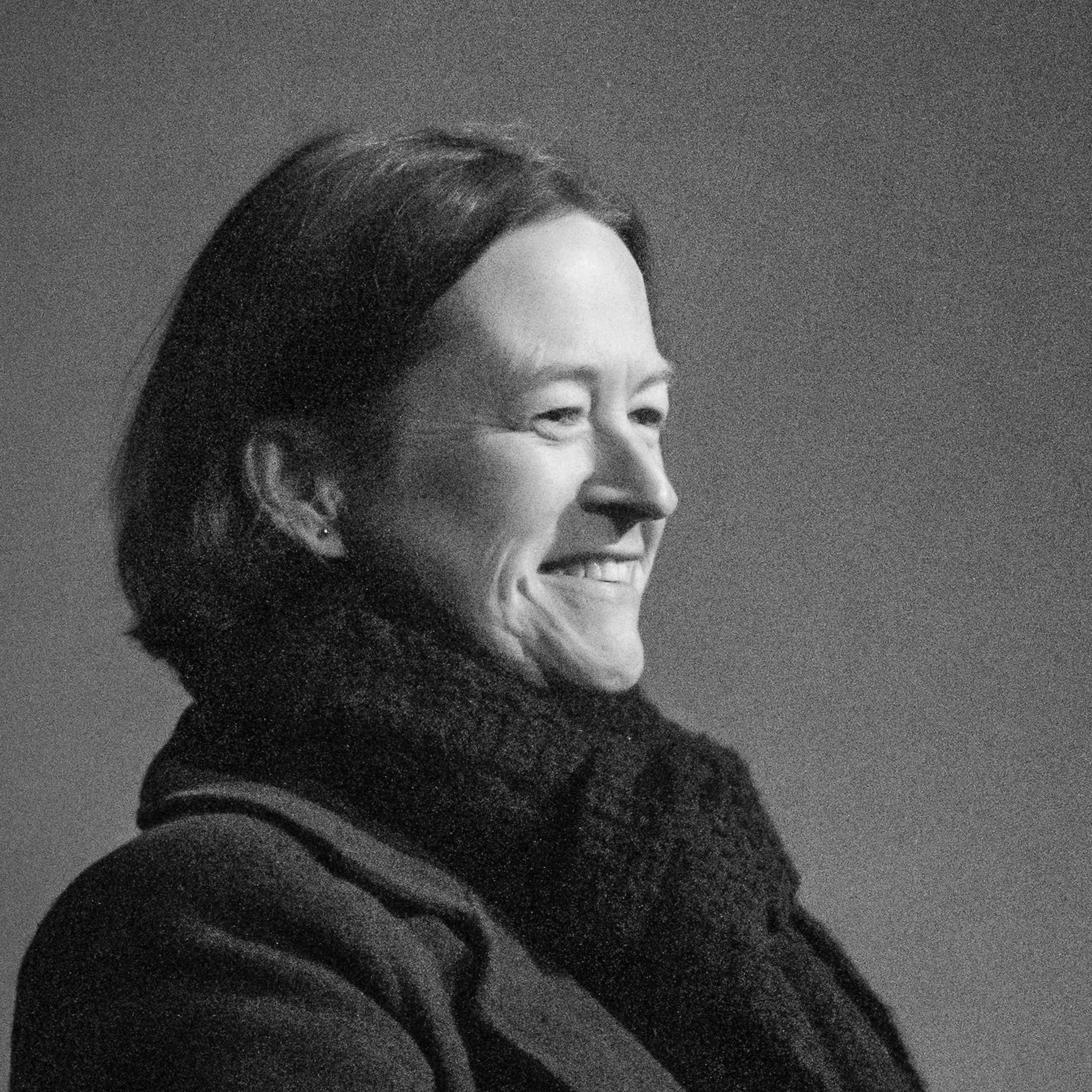
Clare Bryden wrote the poem to highlight themes of peace and justice and to remember the victims of war. Photo: markburley.co.uk
“He was a Prisoner of War from that moment and was taken in cattle trucks up to the Burma (now Myanmar), where a railway was being constructed to supply Japanese troops with supplies.
“The horrors of the Burma Railway are well known. The torture, malnutrition, cruelty, 18 hour working days, constant sickness, were all part of his life for three-and-a-half years. These soldiers were well and truly forgotten by the Western world and the name ‘The Forgotten Army” rings true to this day.
“VE Day in May 1945 was rightly celebrated but VJ Day (and the end of the war) were forgotten. They arrived back in Britain weighing five stone and their army careers in shreds. The mental and physical consequences remained with them for the rest of their lives.
“I was born 9 years after his release. His past resonated through my childhood and still remains with me deeply, to this day.”
The poem weaves together images of the impact of the atomic bombs with references to the Transfiguration of Jesus, when he and three of his disciples go up a mountain to pray and his appearance is transformed by a radiant light and his divine nature is revealed. It begins:
“And there was a great light,
and their clothes became dazzling white
and the appearance of their faces changed.
And there was a cloud overshadowing them
and they were terrified as they entered it.
And they kept silent.”
Clare said “Faith is always hovering in the wings of my writing, and the Transfiguration and Urakami Cathedral were present from the start.
“Luke’s biblical account of the Transfiguration ends with the disciples keeping silent, so silenced voices and the importance of listening became a vital thread too.
“The poem explores people in the world living with threat of nuclear annihilation; the realities of war and its effects on the combatants; the culpability of our so-called leaders; and how nothing seems to be changing; while being careful not to introduce ‘sides’, even though I was conscious of being western, Christian, and on the so-called ‘victorious side’. That’s why it’s just named “VJ Day 2025” for the day in the calendar and doesn’t spell out Victory over Japan.”
Caroline said the poem meant a lot to her: “After 80 years, I had a feeling of recognition for the war my father had; the indignity, the suffering, the trauma, the fear and neglect afterwards.

The city of Nagasaki today
“My father bore no grudges and lived to old age. The poem reflects this, but once a year, I know he did remember how it had been, what he had lost and who he had lost. It led to us talking about the dropping of the two bombs.
“My father never, ever condoned these events. He simply and quietly said that he was at best a few months from death. If the Japanese had not surrendered, his death was certain as was the fact that I would not have existed.
The lines that say it all for me are: “Once a year, or perhaps one day a decade / our shadows tell us it is time / to pay attention to the remnant on his left hand//
Crying out crying / for the rule of law and justice and peace! peace! peace! But they too have been silenced//”
Clare will be reading the poem at the Lord’s Mayor’s VJ Day commemoration ceremony in Northernhay Gardens in Exeter on Friday, at which Caroline will also be laying a wreath and giving a speech in her father’s memory.
She will also be attending the two minutes national silence in Plymouth at 11am, followed by a wreath laying at 12pm and a service at St Andrew’s Minister Church in Plymouth at 1pm to commemorate the end of the 2nd World War and to pay tribute to those who lost their lives.
She said “Peace has to be central to this message now. To recognise man’s inhumanity to man, maybe can help us to understand the importance of peace at all costs. This, to my mind, is why we MUST remember.”
Clare concluded “We can’t afford war. Some might say that pacifism is too idealist. I would say it is the most realistic position to take. For otherwise we run the very high risk of destroying ourselves and the whole Earth. How else are we going to live together on this beautiful finite planet? When will we learn?”